
Injection Mold Transfer to a New Manufacturer: What OEMs Need to Know
An injection mold transfer is the movement of an existing mold from one manufacturer or production facility to another.
You already own the mold.
You already have the part.
You may have years of production history behind it.
What you need is a different manufacturer.
That can happen for many reasons. Your current supplier may no longer have the capacity you need. Production requirements may have changed. You may need additional manufacturing services. A supplier may close, change ownership, or stop supporting a particular program. You may also want to move production closer to your customers or operations.
Whatever the reason, moving an existing injection mold is not as simple as loading the tool onto a truck and installing it in another machine.
The mold has to be evaluated. The production requirements have to be understood. The receiving manufacturer has to determine whether its equipment can properly run the tool. Then the mold has to be sampled and the finished parts compared with your specifications.
At RMC Plastics, we work with customers throughout the injection molding process, including tooling, material selection, production, and manufacturing support. If you are considering moving an existing injection mold, here is what you should know before the tool changes hands.
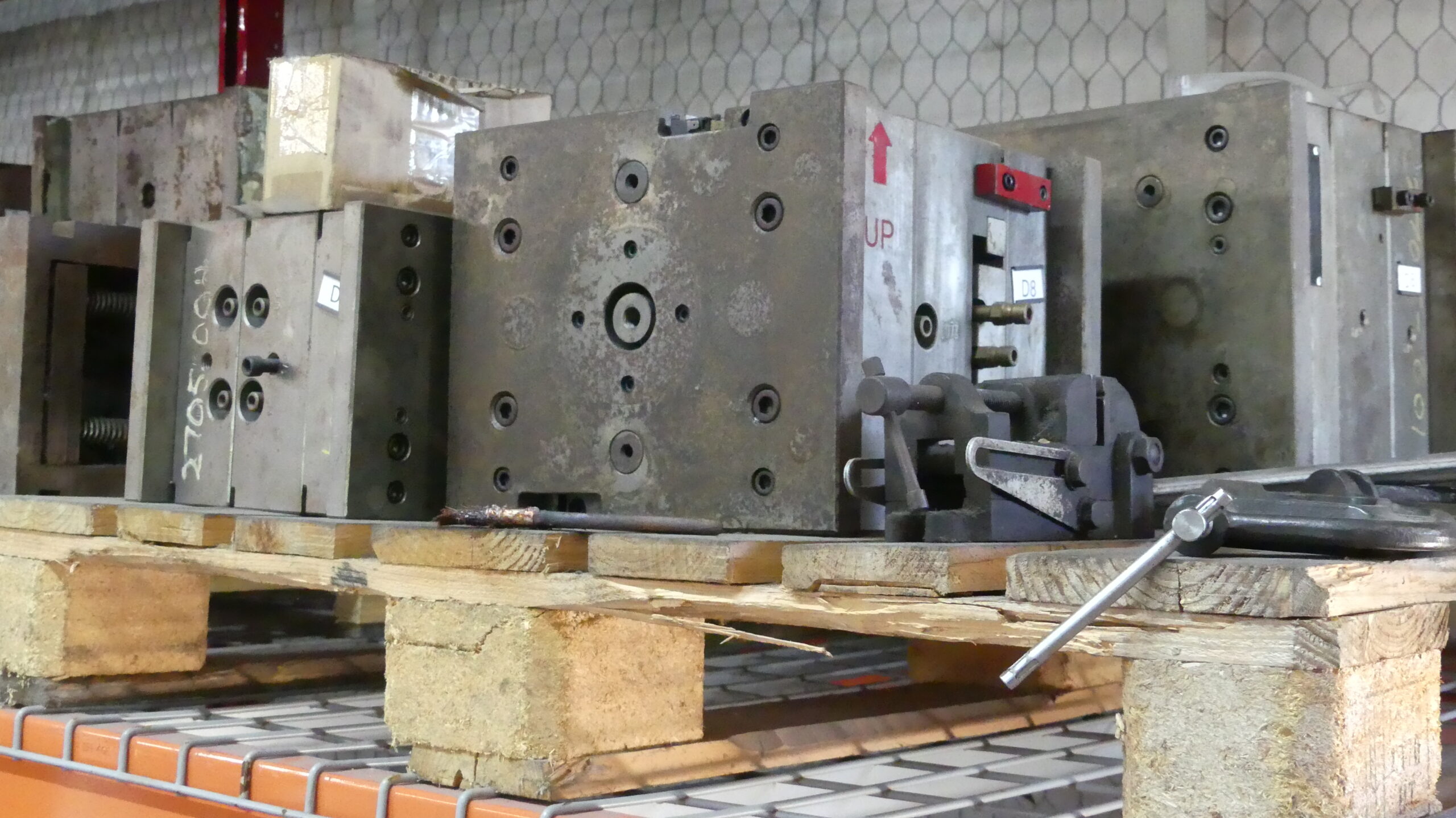
What does an Injection Mold Transfer involve?
The physical move is only one part of the process.
The new manufacturer also needs to understand what the mold produces, how it has been run, what resin is required, what specifications the finished parts must meet, and whether secondary operations are part of the production program.
The receiving manufacturer should also evaluate whether the mold is compatible with its injection molding machines and supporting equipment. Mold dimensions, press requirements, connections, resin requirements, and production volume may all be part of that review.
A mold that ran successfully at one facility should not automatically be assumed to run exactly the same way at another.
The equipment has changed.
The process may need to change with it.
Why Would a Manufacturer Move an Existing Mold?
There is no single reason companies transfer injection molds.
Sometimes the current molding relationship is no longer meeting the company’s production requirements. In other cases, the change has little to do with the current supplier.
A company may consider a transfer when:
- Production volume has changed
- Additional manufacturing capacity is needed
- The existing supplier no longer supports the program
- Delivery requirements have changed
- Part quality needs further evaluation
- Manufacturing operations are being consolidated
- A product is being brought back into production
- Additional assembly or fulfillment services are needed
- Production is being moved to another geographic area
- A supplier is closing, selling, or changing its operations
The reason for the move matters.
If the company is changing suppliers after experiencing dimensional problems, for example, the incoming manufacturer needs to understand those problems before production begins. Simply moving the same mold without investigating the tooling, material, process settings, and part specifications may leave the original problem unresolved.
That is why we view the mold as one part of a larger production system.
Start With the Information You Already Have
Before the mold moves, collect as much information as possible about the tool and the current production process.
Useful records may include:
- Current part drawings
- 3D CAD files
- Mold drawings
- Tool identification numbers
- Material specifications
- Color requirements
- Existing process sheets
- Maintenance records
- Repair history
- Approved production samples
- Inspection reports
- Critical part dimensions and tolerances
- Packaging requirements
- Secondary operation requirements
- Current production volume
- Expected future production volume
Historical process information gives the incoming molder a reference point.
For example, a process sheet may show barrel temperatures, mold temperatures, injection pressures, cooling times, and other settings used during previous production. Those values may not transfer directly to a different machine, but they give the process engineer documented information about how the tool was previously operated.
Maintenance records can provide a different kind of information.
They may show repairs, replaced components, recurring wear areas, or changes made during the mold’s production life.
No records?
That does not automatically make the mold unusable.
It does mean the incoming manufacturer has less historical information available. The tool may require a more detailed inspection, additional sampling, or additional process development before the manufacturer can establish an appropriate production setup.
Confirm That You Have the Right to Move the Tool
Tool ownership should also be clear before arranging a transfer.
Do not assume that paying for tooling automatically answers every ownership or possession question. Tooling agreements, purchase orders, contracts, outstanding balances, modifications, storage arrangements, and other business terms can affect the situation.
Review your records.
Identify the mold.
Confirm where it is located.
Confirm what will be transferred with it.
This may include inserts, spare components, hot runner controllers, fixtures, gauges, drawings, samples, or other items associated with the production program.
Addressing those details before transportation is scheduled can help avoid disputes over which assets were supposed to be included in the transfer.
The New Manufacturer Needs to Evaluate Press Compatibility
Not every injection mold can simply be placed into every injection molding machine.
The receiving manufacturer needs to match the tool with suitable equipment.
Depending on the mold and part, the evaluation may include factors such as:
- Mold dimensions
- Machine platen dimensions
- Tie-bar spacing
- Clamp requirements
- Shot requirements
- Locating ring and sprue configuration
- Water connections
- Hydraulic requirements
- Electrical requirements
- Hot runner systems
- Core pulls
- Ejection requirements
- Material handling
- Required auxiliary equipment
This review matters because the mold and molding machine operate together.
If a mold requires connections, clearances, controls, or operating ranges that a particular machine cannot provide, modifications or different equipment may be needed before the tool can run as intended.
That question should be addressed before the mold arrives whenever enough tooling information is available.
Inspect the Mold When It Arrives
An incoming mold should be treated as a production asset.
It needs to be inspected.
The exact inspection will depend on the tool, its age, its complexity, and the information available. Areas that may need review include the cavity and core, parting surfaces, vents, ejector system, slides, cooling circuits, runner system, bushings, connections, and other moving or wear components.
The purpose of the inspection is not to assume something is wrong.
It is to establish what condition the mold is actually in.
Steel wears.
Components move.
Repairs happen.
A tool that has produced parts for years may have a history that is not obvious from looking at the finished product.
An incoming inspection gives the new manufacturer a chance to document that condition before sampling begins. Tooling-transfer procedures used throughout the injection molding industry commonly include incoming inspection followed by sampling and part qualification.
Does the Mold Need Repairs Before Production?
Maybe.
Maybe not.
A tooling transfer should not automatically turn into a mold rebuilding project.
If the tool is in suitable condition and is compatible with the new manufacturer’s equipment, it may be possible to move into sampling without major repair work.
If inspection finds worn components, damaged surfaces, blocked cooling passages, ejection problems, leaking connections, or another condition that affects operation, those items can be reviewed before production is approved.
The important point is to separate what is known from what is assumed.
Inspect first.
Document the findings.
Then determine what work, if any, is appropriate.
The First Trial Run Matters
Installing the mold is not the finish line.
It is the beginning of qualification at the new facility.
The manufacturer needs to establish appropriate processing conditions using the specified production material. Sample parts can then be evaluated against the customer’s current requirements.
Depending on the product and industry, that evaluation may involve:
- Dimensional inspection
- Visual inspection
- Fit testing
- Functional testing
- First article inspection
- Customer sample approval
- Customer-specific quality documentation
- Additional validation requirements
The level of qualification should match the part.
A simple non-critical plastic component may not require the same documentation as a tightly toleranced component used in a regulated or highly controlled application.
That distinction matters.
Not every project needs the same procedure.
Do Not Assume the Old Process Sheet Is the New Process Sheet
Historical settings are useful.
They are still historical settings.
A new press may differ from the previous machine in screw design, control system, injection capability, clamp characteristics, machine response, or other operating conditions.
The process engineer should use available historical information as a reference while establishing the process on the receiving equipment.
The resin matters too.
The exact material specification should be identified whenever possible. Different polymers and grades can have different flow, shrinkage, processing temperature, moisture, mechanical, and dimensional characteristics. RMC works with customers on material selection and testing as part of its injection molding services.
Changing the mold, machine, material, and process at the same time can make troubleshooting more difficult. When several variables change together, it becomes harder to identify which change is associated with a difference in the finished part.
Control what you can.
Measure what changes.
Document the result.
Plan for Production During the Transfer
There may be a period when the mold is unavailable for normal production.
It may be in transit.
It may be undergoing inspection.
It may be in a trial run.
It may be waiting for sample approval.
Manufacturers should account for that period when planning inventory.
One option is to build an appropriate amount of finished inventory before the tool leaves the existing supplier. That inventory can cover some or all of the period when the mold is between production facilities. The amount required depends on normal demand, current inventory, expected transfer timing, qualification requirements, and the customer’s tolerance for interruption.
There is no universal number.
A company using ten parts per month has a very different inventory requirement from a company using ten thousand.
Plan around your actual production program.
Questions to Ask a New Injection Molding Manufacturer
Before transferring a tool, talk through the process with the company that will receive it.
Ask questions.
Good ones.
For example:
- Can your equipment accommodate our existing mold?
- What tooling information do you need before the transfer?
- What production information should we provide?
- How do you inspect an incoming mold?
- What happens if the mold needs repair?
- How will the initial samples be evaluated?
- What material information do you need?
- What documentation will you provide after sampling?
- Can you support our expected production volume?
- Can you provide assembly, packaging, warehousing, or fulfillment if our program requires it?
- How will future mold maintenance be handled?
You are not merely selecting a place to store a mold.
You are selecting the company that will operate it.
Transferring Existing Injection Molds to RMC Plastics
RMC Plastics has been operating in Houston for more than 50 years and manufactures plastic and rubber molded parts for customers in Texas and across the United States. Our services include product and tooling support, material selection, injection molding, production, assembly, and fulfillment.
When a customer comes to us with an existing mold, we want to understand the entire production requirement.
What does the tool make?
What material does it run?
What are the critical part requirements?
What production history is available?
What does the customer need from the program going forward?
Those questions give us the information needed to evaluate the project rather than treating the mold as an isolated piece of steel.
Have an Existing Injection Mold You Need to Move?
Changing injection molding manufacturers does not always mean starting over with new tooling.
An existing mold may be transferable when its condition, configuration, ownership, and production requirements are compatible with the receiving manufacturer’s capabilities.
The key is evaluation.
Not assumption.
At RMC Plastics, we can review your existing tooling and production requirements to determine what is needed before the mold enters production at our Houston facility.
If you are considering moving an existing injection mold to a new manufacturing partner, contact RMC Plastics to discuss the tool, the part, and your production needs.
Frequently Asked Questions About Injection Mold Transfers
Can an existing injection mold be moved to another manufacturer?
In many cases, yes. The new manufacturer should evaluate the mold’s condition, configuration, production requirements, and compatibility with its injection molding equipment before accepting it for production.
Do I need to build a new mold when changing injection molding companies?
Not necessarily. If your existing mold is suitable for continued production and compatible with the new manufacturer’s equipment, the existing tool may be transferred. Inspection or modifications may be needed in some cases.
What information should I provide when transferring an injection mold?
Useful information includes part drawings, mold drawings, CAD files, material specifications, production volumes, process sheets, maintenance records, approved samples, inspection requirements, packaging specifications, and information about secondary operations.
Does a transferred injection mold need to be tested again?
The receiving manufacturer generally needs to sample the mold on its equipment and establish the production process. The parts can then be checked against the current drawing, specifications, approved sample, or other customer requirements before normal production begins.
What if we do not have the original mold documentation?
A transfer may still be possible. Missing drawings, process sheets, or maintenance records leave the incoming manufacturer with less information about the tool’s history. Additional inspection, measurement, sampling, or process development may be needed to establish the information required for production.
Can RMC Plastics manufacture parts from customer-owned tooling?
RMC Plastics works with customers on injection molding, tooling, material selection, production, assembly, and related manufacturing services. Customers with an existing mold can contact us to have the tooling and production requirements evaluated for compatibility with our manufacturing capabilities.