
Injection Molded Parts for Utility and Infrastructure Products: What Matters Most in Harsh Field Conditions
Injection molded parts for utility and infrastructure products have to do more than fit a spec sheet. They have to hold up in the field, handle rough conditions, and keep doing their job when heat, moisture, pressure, and daily wear show up.
At RMC Plastics, we work with customers who need plastic parts that perform in the real world. Not just in a sample box. Not just in a clean room. In actual utility, construction, and infrastructure settings where parts get handled, installed, exposed, and tested every day. Our company serves industries that include electric utility, gas utility, water utility, construction, and plumbing, and we support those markets with custom molding and related production services.
That matters because field conditions are tough.
A part may sit in heat. It may face cold mornings and hot afternoons. It may deal with moisture, dirt, pressure, chemicals, friction, or UV exposure. In utility and infrastructure work, a weak part does not just wear out fast. It can create delays, callbacks, and replacement costs nobody wants.
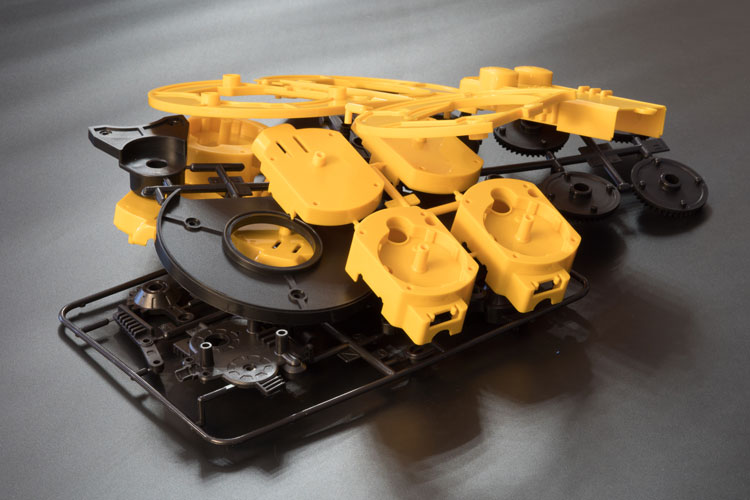
Utility and Infrastructure Parts Need to Be Built for Real Conditions
A lot of molded parts look fine on paper.
That is not enough.
A part can have the right dimensions and still fail in service if the material is wrong, the wall thickness is off, or the design does not match the demands of the job. This is especially true in electric, gas, and water utility applications, where molded plastic components are often used in connectors, fittings, valves, meters, and other critical parts that need insulation, dimensional control, and resistance to heat, chemicals, pressure, and outdoor conditions.
That is why we think field performance has to be part of the conversation from the start.
What will the part be exposed to?
How often will it be handled?
Will it face impact? Pressure? Sunlight? Chemicals? Repeated installation? Vibration?
Those are not side questions. Those are core questions.
Material Selection Can Make or Break the Part
This is one of the biggest decisions in the whole process.
Pick the right material, and the part has a fighting chance. Pick the wrong one, and the part may warp, crack, wear out too fast, or fail in ways that cost time and money later. RMC Plastics already highlights material consulting as one of its services, and its recent blog content also stresses that choosing the right plastic matters because the wrong material choice can shorten service life and hurt part performance.
For utility and infrastructure products, material choice often comes down to the conditions the part will face. Some applications need strong electrical insulation. Some need better chemical resistance. Some need toughness under impact. Others need stability under heat, pressure, or outdoor exposure.
There is no single best plastic for every job.
That is the point.
The material has to match the use.
Wall Thickness and Part Design Matter More Than Buyers Sometimes Realize
Good parts are not just about resin.
Design matters too.
Wall thickness, rib placement, corners, draft angles, and overall geometry all affect how a molded part performs. If the walls are inconsistent, the part may cool unevenly and create sink, warp, or stress points. If the geometry is too sharp or too thin in the wrong place, the part may become more likely to crack or fail under load.
That is not theory. It shows up in production and in the field.
For infrastructure products, where repeat reliability matters, smart design helps reduce those risks. It also helps support tighter consistency from run to run. Injection molding is widely used because it can deliver repeatable parts with strong dimensional control, and that repeatability is a major benefit for industries that depend on fit, function, and scale.
Harsh Field Conditions Expose Weak Points Fast
Utility and infrastructure parts do not get pampered.
They get used.
They get installed by crews working on deadlines. They get exposed to weather. They get loaded into trucks, handled on jobsites, and expected to perform without fuss. That is why molded parts for these markets need more than a clean finish. They need real durability.
Common field problems usually trace back to a few weak spots:
- Poor material choice
- Thin or uneven wall sections
- Weak design around stress points
- Inconsistent molding quality
- A part designed for low-demand use being pushed into high-demand conditions
A product may survive testing and still struggle in actual service if the design process did not fully account for how the part would be used. That is why application knowledge matters as much as molding knowledge.
Utility Work Often Demands More Than Basic Accuracy
Yes, dimensions matter.
But field parts often need more than that.
In electric utility settings, molded parts may need insulation properties and heat resistance. In gas and water utility work, molded components such as fittings, valves, meters, and connectors may need to stay leak resistant and stable under pressure and changing conditions. Construction and plumbing products also need durability, corrosion resistance, and ease of installation. RMC Plastics specifically points to these use cases in its injection molding content.
So when we talk about quality, we are not just talking about whether a part came out clean.
We are talking about whether it will do the job it was built to do.
A Strong Molding Partner Helps Prevent Problems Upstream
A lot of part failures start long before production.
They start in planning.
When a molder understands the end use, asks the right questions, and works through design and material choices early, the customer has a much better chance of getting a part that performs the way it should. RMC Plastics offers services that support that process, including mold design services, material consulting services, prototype manufacturing, production services, assembly services, and warehousing.
That range matters.
Because utility and infrastructure buyers often need more than molded pieces dropped in a box. They may need help refining the part, testing the concept, planning production, or supporting delivery schedules. A molder that can think beyond the press is often easier to work with and more useful over the life of the project.
Production Capacity and Responsiveness Matter Too
This part gets overlooked until a deadline gets tight.
Then it matters a lot.
RMC Plastics says it operates 12 injection molding machines of differing sizes, has capacity for large part runs, and can perform quick changeovers for immediate needs. The company also describes itself as family owned, responsive, and focused on timely delivery, quality products, and proven value.
For utility and infrastructure products, that kind of responsiveness matters because demand does not always stay flat. Schedules move. Needs change. A vendor that can adapt is valuable.
Why This Matters for Long-Term Product Performance
Infrastructure products usually are not impulse buys.
They are expected to work. For a while.
That is why molded parts in these markets need a longer view. Buyers have to think about service life, handling conditions, field use, material behavior, repeat production, and whether the supplier understands the industries being served. RMC Plastics states that it has more than 50 years of injection molding experience and serves industries ranging from consumer products to oil and gas, utilities, construction, plumbing, and medical.
That background matters because utility and infrastructure parts are rarely forgiving. They tend to expose weak design, weak materials, and weak process control fast.
What Buyers Should Look for
If you are sourcing molded parts for utility or infrastructure use, ask practical questions early:
- What conditions will this part face in the field?
- Is the material matched to the actual use?
- Is the part designed for stress, pressure, handling, and exposure?
- Can the molder help with design and material decisions?
- Can they support scale, changeovers, and production needs?
- Do they understand utility, construction, and plumbing applications?
Those answers tell you a lot.
Injection Molded Parts for Utility and Infrastructure Products Need More Than a Good Price
Injection molded parts for utility and infrastructure products need to perform where it counts: in the field, under pressure, and over time. At RMC Plastics, we understand that harsh conditions expose every weakness in a part, which is why smart design, the right material, and dependable molding matter so much for injection molded parts for utility and infrastructure products.