
Repeatability Keeps Injection Molded Parts Consistent Across Every Production Run
RMC Plastics produces injection molded parts with repeatability in mind because manufacturers need parts that match the same specs every time.
A good part once is helpful.
A good part every time is what production teams actually need.
That is where repeatability comes in.
In injection molding, repeatability means the process can produce the same part again and again with the same size, shape, fit, strength, and finish. It means the first run and the next run should stay consistent when the tooling, material, machine setup, and process are controlled properly.
For manufacturers, this matters a lot.
A part that changes slightly between runs can create bigger problems down the line. It can affect assembly. It can slow production. It can increase scrap. It can cause customer complaints. It can create delays that cost real money.
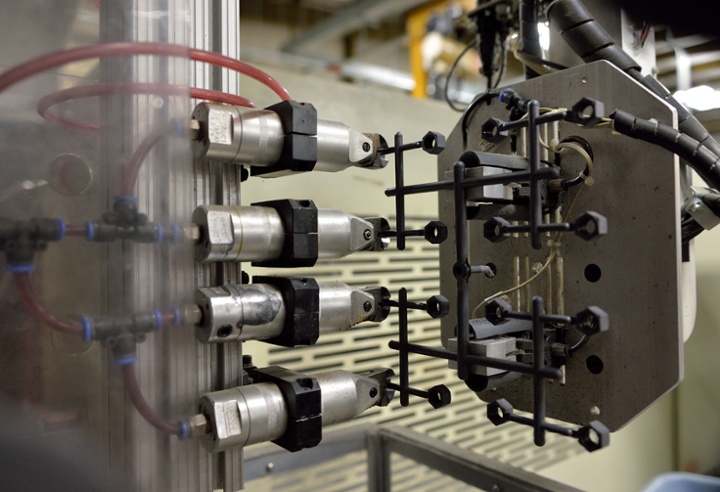
Repeatability Starts With a Stable Injection Molding Process
Injection molding depends on control.
The machine heats the plastic, injects it into the mold, packs it under pressure, cools the part, and ejects it. That cycle repeats over and over.
When the process is stable, the parts stay consistent.
When the process moves around too much, part quality can change.
Small changes in pressure, temperature, cooling time, material condition, or machine setup can affect the finished part.
That is why repeatability depends on more than the mold alone.
It depends on the full system working together.
Why Part Consistency Matters to Manufacturers
Most plastic parts are made to fit into something else.
They may connect to another component. They may sit inside an assembly. They may protect wiring. They may serve as a housing, cover, fitting, insert, bracket, cap, or custom product part.
If those parts vary too much, problems can show up fast.
A part may be too tight.
A part may be too loose.
A snap feature may break.
A hole may not line up.
A cover may not close correctly.
A customer may reject the part.
A small change in the molded part can create a larger issue in the finished product.
Repeatability helps reduce those risks.
Tooling Plays a Major Role in Repeatable Injection Molding
The mold is one of the biggest factors in repeatable production.
A well-built mold helps plastic flow, cool, and eject the right way. It supports consistent part dimensions and reduces common defects.
Poor tooling can create problems that show up across every run.
Tooling can affect:
- Part size
- Part shape
- Cooling
- Surface finish
- Gate marks
- Flash
- Ejection marks
- Warping
- Cycle time
If the mold has poor cooling, uneven wall support, weak shutoffs, or bad venting, repeatability becomes harder.
A good mold does more than create the shape of the part. It supports the full molding process.
Material Consistency Also Affects the Finished Part
Plastic material needs to be controlled before and during production.
Different resins behave in different ways. Some absorb moisture. Some need drying before molding. Some are more sensitive to heat. Some shrink more than others.
Even when the same resin is used, material handling matters.
Material problems can lead to:
- Bubbles
- Voids
- Poor surface finish
- Weak spots
- Dimensional changes
- Short shots
- Burn marks
- Brittle parts
This is why material selection, storage, drying, and processing conditions all matter.
Repeatable parts start with repeatable material behavior.
Machine Setup Helps Control Part Quality
The injection molding machine must be set up properly for the job.
Important settings include:
- Melt temperature
- Mold temperature
- Injection speed
- Injection pressure
- Pack pressure
- Cooling time
- Clamp pressure
- Shot size
- Cycle time
These settings need to match the material, mold, and part design.
When the machine setup is dialed in and monitored, the production run stays more stable.
When setup changes without control, part quality can drift.
For manufacturers, that drift can be expensive.
It may not be obvious right away. A part may look fine at first glance but measure out of spec later. That is why process control matters.
Repeatability Helps Reduce Waste and Rework
When parts change too much during production, waste goes up.
Bad parts may need to be scrapped. Parts may need to be sorted. Assemblies may need to be reworked. Orders may need to be remade.
That costs time and money.
Repeatability helps reduce:
- Scrap
- Rework
- Production delays
- Assembly issues
- Customer returns
- Inspection problems
- Material waste
- Labor waste
A stable process gives manufacturers more confidence in the parts they receive.
Repeatability Supports Better Planning
Manufacturers need dependable production schedules.
When injection molded parts are consistent, it becomes easier to plan inventory, assembly, shipping, and customer deliveries.
A repeatable process helps with:
- Production forecasting
- Part availability
- Inventory control
- Just-in-time delivery
- Vendor reliability
- Long-term purchasing
If a part is used in an ongoing product line, repeatability becomes even more important.
One successful run may solve a short-term need. A reliable process supports long-term production.
Design for Manufacturability Improves Repeatability
Repeatability should be considered during part design.
Some designs are harder to mold consistently. Uneven wall thickness, sharp corners, deep ribs, poor draft, and difficult ejection areas can create problems.
Design for manufacturability helps identify those issues before tooling and production.
Better design choices can improve:
- Plastic flow
- Cooling
- Part strength
- Dimensional control
- Ejection
- Cycle time
- Surface finish
Good design does not mean the part has to be plain. It means the part should be designed in a way that supports the molding process.
That is how manufacturers get better results.
Quality Control Confirms the Process Is Working
Repeatability needs to be checked, not assumed.
Quality control helps confirm that molded parts are meeting the required specs.
This may include visual checks, dimensional inspections, sample reviews, and production monitoring.
The goal is to catch issues early.
A small correction during production can prevent a much larger problem later.
Quality checks help confirm that the process, material, machine, and mold are all working together as expected.
Repeatable Injection Molding Builds Supplier Confidence
Manufacturers need suppliers they can count on.
They need parts that arrive on time and perform the way they should. They need fewer surprises. They need clear communication when a part, tool, or material needs attention.
Repeatability is one of the main signs of a reliable injection molding partner.
It shows that the supplier understands process control, tooling, material behavior, machine setup, and production quality.
That matters for new products, replacement parts, industrial components, consumer products, utility parts, and long-running production programs.
Consistent Parts Start With a Controlled Process
Repeatability is one of the most important parts of injection molding.
It helps protect part quality, reduce waste, support assembly, and keep production moving. For manufacturers, it can mean fewer delays, fewer rejected parts, and better long-term results.
RMC Plastics works with manufacturers that need injection molded parts produced with consistency, care, and practical production experience.
FAQs About Repeatability in Injection Molding
What does repeatability mean in injection molding?
Repeatability means the molding process can produce the same part with consistent size, shape, finish, strength, and fit across multiple cycles and production runs.
Why is repeatability important for plastic parts?
Repeatability matters because inconsistent parts can cause assembly problems, rejected parts, delays, scrap, rework, and customer complaints.
What affects repeatability in injection molding?
Repeatability can be affected by tooling, material condition, machine settings, temperature, pressure, cooling time, part design, and quality control.
Can poor mold design affect repeatability?
Yes. Poor mold design can cause uneven cooling, warping, flash, dimensional changes, poor ejection, and other issues that affect part consistency.
How does RMC Plastics support repeatable production?
RMC Plastics supports repeatable production through experienced injection molding, tooling review, material handling, machine setup, process control, and quality-focused production.